 MAB Reviewed
Do You Still Need Birth Control During Perimenopause?
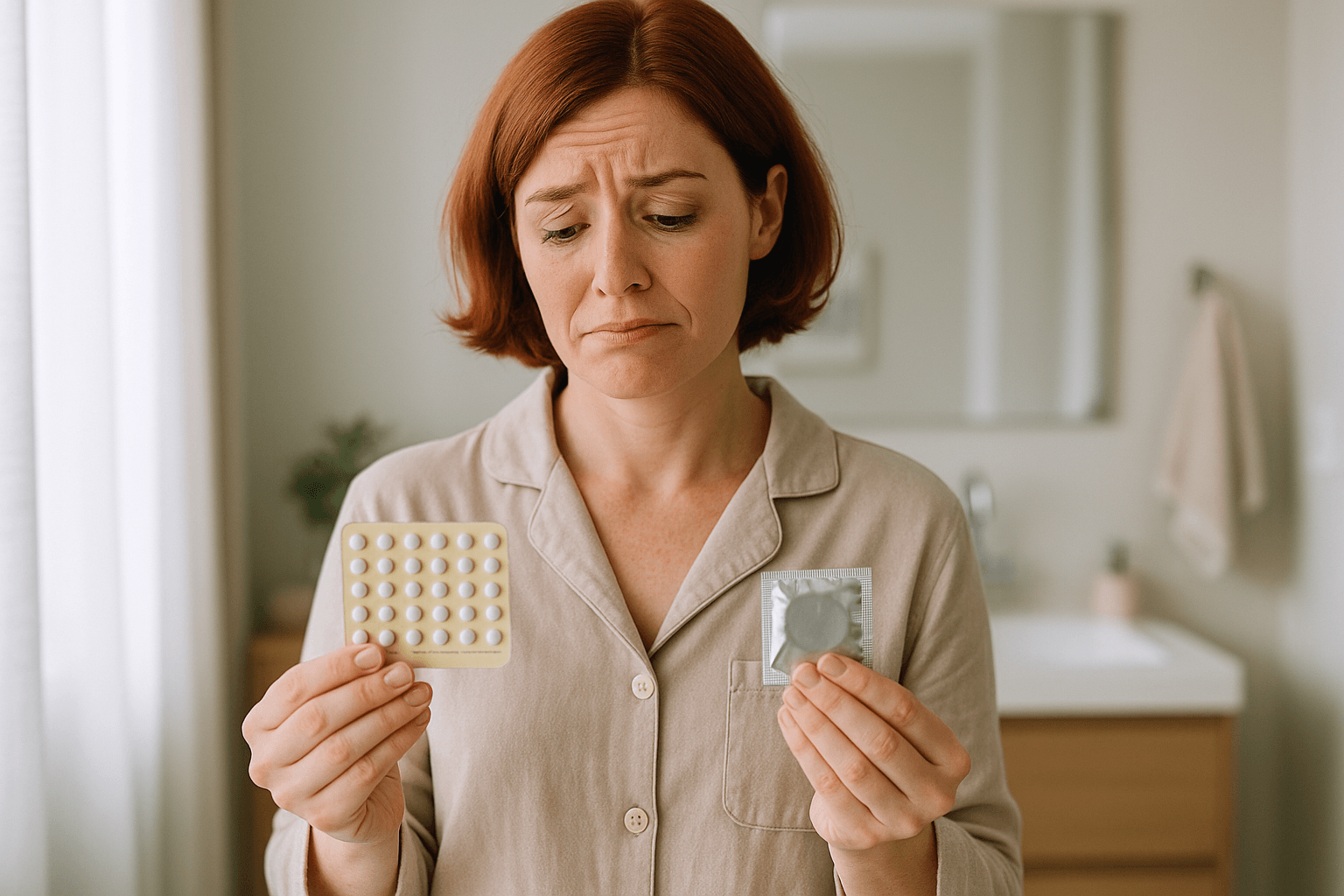
Pregnancy is still possible during perimenopause, even with irregular periods. Birth control helps prevent unplanned pregnancy and some methods can ease symptoms like hot flashes or heavy bleeding. Talk with your provider to find the best option for you.
Written by Emilie Pauwels

Reviewed by Dr. Tara K. Iyer
Director, Menopause & Midlife Clinic, Brigham and Women’s Hospital
In short, yes: if you have a uterus and at least one ovary, you definitely still need birth control.
Navigating contraception during the menopause transition can be confusing, though, especially if you don't have regular periods. Let’s dive in and discuss why and how you should be considering contraception during this time of life.
Birth control during perimenopause: why it still matters
The menopausal transition often involves irregular menstrual cycles , unpredictable bleeding patterns, and cycles without ovulation . All women experience perimenopause differently.
Some people have other factors that may alter or completely stop their menstrual bleeding: these may include endometrial ablations, use of hormonal birth control methods, and surgical removal of the uterus (hysterectomy). Because of this, it’s unreliable to judge your fertility based solely on the absence of a period.
Until you’ve gone 12 months without a menstrual period and you’re officially postmenopausal, pregnancy remains possible.
If avoiding pregnancy is a priority for you, you must use some form of contraception. This is more important than many people realize: Approximately one-third of pregnancies in women over 40 are unplanned .
Don’t forget that protection against sexually transmitted infections (STIs) remains relevant at every age. Even when you’re postmenopausal and no longer need contraception, you can still acquire an STI.
How does fertility change during the menopause transition?
The menopausal transition is a turbulent time filled with new symptoms, from hot flashes and night sweats to mood swings and reduced libido.
Perimenopause is also marked by fluctuating hormone levels and irregular periods . Many women believe that not having regular periods means they can no longer conceive, but this isn’t always true.
Fertility declines with age, especially after the mid-30s, but does not reach zero until menopause is complete . Hormone levels fluctuate and change during perimenopause: for example, your levels of estrogen, progesterone, inhibin B, and anti-Müllerian hormone (AMH) all decrease .
These shifts affect your reproductive system, causing changes that make pregnancy less likely :
The ovaries get smaller.
The quality of eggs decreases.
There are more anovulatory menstrual cycles in which the ovaries don’t release an egg.
While these changes reduce the likelihood of pregnancy, they don’t make conception impossible: you can still get pregnant until you’ve completed the menopause transition .
Questions of fertility become even more complex if your periods are already irregular due to medical treatments or other health conditions. This is why it’s so important to continue using contraception until you can confirm with your healthcare provider that you’re fully postmenopausal.
What is the best birth control for people in perimenopause?
There are many birth control options, and choosing which to use is a personal decision.
Birth control methods fall into two main categories:
Hormonal contraceptives use hormones to prevent pregnancy. Examples include birth control pills, patches, vaginal rings, injections, implants, and hormonal intrauterine devices (IUDs) .
Non-hormonal contraceptives include barrier methods such as condoms and diaphragms , as well as copper IUDs.
Pro-tip: Condoms and dental dams are the only barrier methods that also protect you against STIs .
Fertility awareness methods also fall in the non-hormonal category. These techniques require you to self-monitor certain signs, such as cervical mucus or body temperature, to assess when you’re most fertile during each menstrual cycle . However, because cycles are irregular in perimenopause, these methods become more complex and less reliable .
For those seeking a highly reliable method of contraception, IUDs, both hormonal and non-hormonal, are an extremely effective form of birth control . Unlike the pill or the patch, you don’t have to remember how or when to use an IUD, so it’s not susceptible to the same user error.
People seeking a permanent contraception method may opt for sterilization (aka, “getting your tubes tied”). Although it’s minimally invasive, sterilization is still a surgical procedure, so it may not be an ideal option for everyone .
Hormonal contraception doesn’t change when or how fast you’ll move through the menopause transition . However, it can treat symptoms of perimenopause, making it harder to know where you are in the menopause transition .
Talk with your healthcare provider to understand the risks and benefits of each contraception option so you can make the best choice for you.
When should I stop taking birth control?
In general, contraception is no longer necessary after you’ve gone 12 consecutive months without a period . However, you should always talk with your healthcare provider before stopping contraception use.
If you don't have a period due to medical conditions or surgical history, the Menopause Society (formerly the North American Menopause Society) recommends continuing contraception until you’re 55 years old . By age 55, 96% of women are postmenopausal , and pregnancy is extremely rare .
For women using most types of progesterone-only hormonal birth control, blood tests for follicle-stimulating hormone (FSH) levels may help guide the decision to stop contraception .
Why contraception still matters during perimenopause
Contraception is critical to prevent unintended pregnancies. Surprise pregnancies can be disruptive at any age, but they become riskier for women over 40.
When the pregnant person is over the age of 40, the rates of adverse health events are higher for both mother and fetus . These pregnancies carry increased risks of pregnancy loss, severe complications during childbirth, and even maternal death .
Babies born to older mothers are also more likely to have chromosomal abnormalities that can cause developmental delays, such as Down syndrome .
If you’re over 40 and intending to conceive, there are ways to manage these risks and improve your pregnancy outcomes. However, this requires close collaboration with your medical team and a willingness to accept the possible risks . If having a baby later in life isn’t on your bingo card, you must have a plan for contraception.
Some women in midlife can’t possibly become pregnant, such as those who’ve undergone surgery to remove their ovaries. Regardless of your pregnancy risk, though, you can still acquire an STI if you’re sexually active.
Surveys show that 9% of women aged 40–59 report having a new, male sexual partner, yet three-quarters did not use condoms with this partner—often because they don’t believe they are at risk for STIs .
In reality, older women are actually more vulnerable to genital STIs due to the decreasing natural immunity of their vaginal tissue . This makes barrier methods for STI prevention all the more important in midlife and beyond!
Can birth control help with perimenopause symptoms?
In addition to preventing pregnancy, some contraceptives can provide some relief from perimenopause symptoms . In some cases, they can be a substitute for menopausal hormone therapy in the management of menopause symptoms .
Importantly, this isn’t a two-way street: taking MHT doesn’t mean you no longer need birth control. Most MHT doses aren’t high enough to act as contraception .
Combined oral contraceptives (aka the pill) deliver both estrogen and progestin, a synthetic form of progesterone . This combination of hormones can reduce perimenopausal symptoms such as hot flashes, night sweats, hormone-related headaches, and heavy or painful menstrual bleeding .
These hormonal contraceptives may also help to protect against bone loss and reduce endometrial, colorectal, and ovarian cancer risk factors .
As always, talk with your healthcare provider about your unique case: they can help you determine if hormonal contraceptives are the right fit for your needs during perimenopause, or if you should consider other options.
Why tracking contraception helps: tips to navigate an uncertain time
Unpredictability surrounding fertility can cause anxiety, whether you are trying to avoid pregnancy or hoping to conceive. Tracking your menstrual history, perimenopausal symptoms, and any current medications can make it easier to manage symptoms, make fertility-related decisions, and determine when menopause has occurred.
Some tips to help during this transitional time:
Continue contraception until your healthcare provider has confirmed menopause by reliable indicators and/or advises you that you can stop.
Track symptoms of perimenopause such as hot flashes, shifting menstrual cycles, changes in mood or sleep, etc. Tracking symptom severity can also help you identify patterns and trends.
Monitor any side effects from your chosen contraceptive method and discuss adjustments with your healthcare provider.
Accurate tracking helps your healthcare provider interpret your perimenopause symptoms and test results in context, ensuring the most appropriate guidance for your situation. In modern menopause care, data is power!
Questions to ask your healthcare provider
We know this is all a lot to take in, but remember, you don’t have to face it all alone! Here are some questions to guide your contraception conversations with your care providers:
How can I tell when I’m postmenopausal if I don’t have periods due to my hormonal IUD (or ablation, etc.)?
Which is the best birth control option for me right now, given my medical history?
I am thinking of stopping birth control, but I am not sure if I have had my final menstrual period. What do you think I should do?
What is the best birth control pill for perimenopause? Can a combination pill alleviate perimenopause symptoms?
Contraception is still important for people in perimenopause. Choosing the right method can make your transition through menopause healthier and smoother, and Amissa is here to help.
DISCLAIMER
This article is intended for educational purposes only, using publicly available information. It is not medical advice, and it should not be used for the diagnosis, treatment, or prevention of disease. Please consult your licensed medical provider regarding health questions or concerns.
Want support through the transition?
Sign up for early access to Amissa and stay informed as we grow.