 MAB Reviewed
Menopause Messing With Your Hair? Why It Happens and How to Fix It
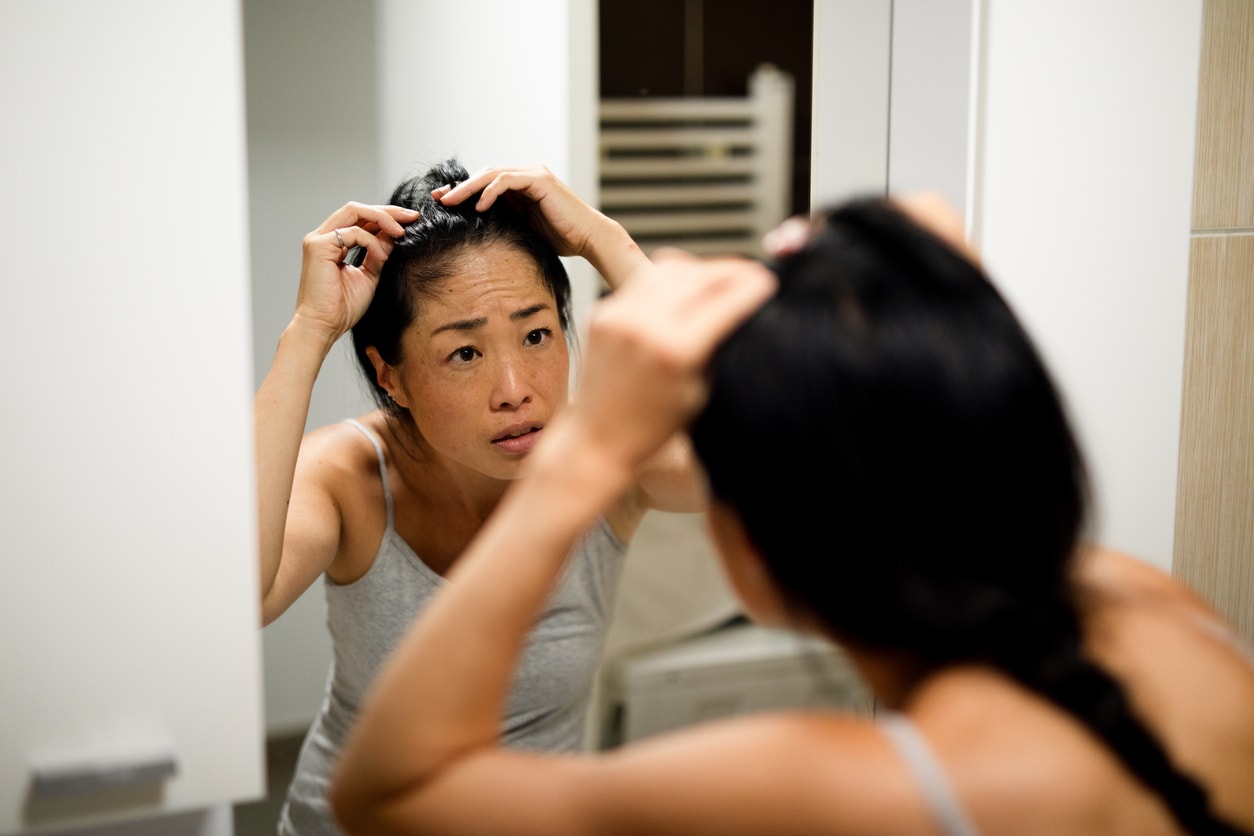
Menopausal hair thinning is common, affecting millions of women and often impacting confidence, mental health, and overall well-being. Understanding the causes of female pattern hair loss—and the treatments and tracking strategies that can slow shedding—can help you protect your hair and feel more in control during the menopause transition.
Written by Simona Byler
Reviewed by Dr. Jaclyn Piasta
Monarch Health
If you’re noticing your hair thinning with menopause, know that you’re not the only one. Hair loss is a common menopausal symptom that can impact much more than your outward appearance; your self-esteem, mental health, and relationships can take a hit, too.
Read on as we discuss the details of menopausal hair loss, including what causes it, and what you can do to stop it.
What is female pattern hair loss?
Female pattern hair loss (FPHL), previously known as androgenetic alopecia, is a common and distressing condition that affects over 21 million women in the U.S. alone . FPHL can happen at any stage of life, but it becomes more common with age.
Female pattern hair loss occurs in :
12% by age 29
25% by age 49
41% by age 69
Over 50% by age 79
These numbers make FPHL the most common hair loss condition among those born with ovaries . Knowing what FPHL looks like can help you recognize it and seek treatment if needed.
What does female pattern hair loss look like?
If you’re experiencing FPHL, your hair follicles are becoming smaller and smaller over time. This causes hair loss in a specific pattern known as the Ludwig pattern .
During peri- and postmenopause, hair thinning typically :
Occurs in the middle of your scalp, then spreads outwards towards the front and sides of your head.
Makes the part in your hair appear thinner and more sparse.
Leaves the front of your hairline largely intact, differentiating FPHL from male pattern baldness.
Wondering how to know whether your hair shedding is “normal”? There are a few ways that healthcare providers may diagnose FPHL. One method is a simple “pull test”, where they gently tug at about 50 hairs. If more than 10% of those hairs easily come loose, this can indicate a high degree of hair shedding .
Besides hair loss, hair changes during and after the menopause transition can also include :
Decreased hair fullness
Changes in hair texture
Thinning of individual hair shafts
What causes menopausal hair loss?
During perimenopause, estrogen levels begin to decline. Androgens, or male hormones such as testosterone, increase in comparison . These hormonal fluctuations directly affect your hair follicles, which are sensitive to estrogen, and the hair growth cycle .
While we don’t fully understand the exact cause of FPHL, experts know that there are several contributing factors, and estrogen and testosterone play a major role. Here are the details :
Estrogen: Low estrogen levels may cause blood vessels to shrink, reducing the supply of blood, nutrients, and oxygen to hair follicles in postmenopausal women.
Androgens: After menopause, higher relative levels of testosterone and testosterone-like hormones may lead to thinning scalp hair and unwanted facial hair.
Progesterone: This hormone works to inhibit the effects of testosterone. As progesterone levels decrease, more testosterone can break down in your bloodstream and contribute to hair loss.
Lower energy levels: Hair follicles need a lot of energy—about 670 kilojules—to grow hair! Age and menopause cause a decline in energy throughout your body and follicles, causing hair thinning.
Your healthcare provider may also want to rule out other common causes of hair loss, such as low iron, vitamin deficiencies, thyroid conditions, and certain medications . Specifically, GLP-1 medications can cause telogen effluvium (TE), a temporary hair loss condition that differs from FPHL .
How thinning hair can impact your life
If you’re losing hair during the menopause transition, you know it’s not just your appearance that changes. Hair loss can have a significant impact on your psychological and social well-being
Female pattern baldness can affect your mental health and lower your quality of life in a similar way to serious chronic illnesses . Many women with FPHL deal with stress, depression, anxiety, and low self-esteem . It can affect your relationships, your body image, and cause you to avoid social interactions .
Scalp hair might not be essential to your survival, but losing hair can certainly affect your quality of life and overall well-being. If you’re dealing with FPHL, know that you’re not alone, and hair loss treatments can help.
Treatment options for menopausal hair loss
If you’re struggling with hair loss during or after the menopause transition, know that treatment options can help. Your healthcare provider can work with you to assess the severity of your symptoms and determine the best treatment for your needs.
It's important to have realistic expectations when starting treatment, as hair growth is a slow and complex process. Meaningful improvement can take time, often six months to a year after beginning treatment.
While we’d all love to see full hair regrowth, most treatments for FPHL are considered successful if they slow or stop further shedding . Some individuals may also notice new growth or thicker, healthier hair over time, though results can vary from person to person .
With that in mind, let’s discuss possible ways to treat hair loss during menopause.
Topical treatments
Several topical therapies exist to help with hair loss, which you apply to your scalp daily. These treatments include:
Topical minoxidil: The only FDA-approved drug for FPHL, minoxidil helps to stimulate hair growth by increasing the anagen phase—or growth phase—of the hair growth cycle. When effective, providers recommend using minoxidil indefinitely because stopping can cause telogen effluvium, a temporary hair loss condition .
Ketoconazole shampoo: This treatment helps improve hair growth by changing how testosterone affects the hair follicle and reducing inflammation . Ketoconazole shampoo 1% is available over the counter, or your doctor can prescribe you a stronger concentration.
Systemic treatments
Taken as daily oral pills, systemic treatments may have more side effects than topical options and are often prescribed along with birth control pills . Systemic options include :
Oral minoxidil: Your doctor may prescribe oral minoxidil off-label, or not for its intended use, to treat FPHL. Oral minoxidil can improve hair density and may be a good option if you’re not able to use topical minoxidil.
Finasteride: While not FDA-approved for women, finasteride may help those whose hair loss is due to hyperandrogenism, or an excess of male hormones.
Dermatologic treatments
Treating hair loss may require a comprehensive approach, depending on your needs and desired outcomes. You may consider additional dermatologic treatments for hair loss, including :
Platelet-rich plasma injections (PRP): This is a slightly more invasive option, where a trained clinician either stores the hair grafts in PRP or injects PRP into the scalp before transplanting hair grafts. This may help with hair growth by increasing collagen and blood flow around hair follicles.
Microneedling: Microneedling is a non-invasive procedure where a licensed professional rolls a device over your skin to puncture it and kick-start the wound healing process. Microneedling can help promote hair growth when paired with other treatments such as PRP or topical treatments.
Stay ahead of hair loss with tracking
Hair loss doesn’t happen overnight, making it difficult to notice how your hair changes from one day to the next. Tracking your hair during the menopause transition can help you stay alert to these changes, no matter how gradually they occur.
Similarly, you won’t regrow hair immediately after starting treatment. Providers may recommend that you continue a hair loss treatment for at least six months before assessing its success . Tracking your hair during treatment will help you and your provider understand how you’re responding and if you need further intervention.
Questions to ask your provider
If female pattern hair loss is affecting your mental health or self-esteem, it’s not something to ignore! Discuss your concerns and share your tracking data with your healthcare provider; this information is key to getting the treatment you need. Consider asking the following questions at your next appointment to get the conversation started:
I’ve been dealing with some diffuse hair loss, and it’s been negatively impacting my self-esteem. Can I get your opinion on my hair shedding and discuss treatment options?
I’ve tracked my hair changes over the last several months, mainly my perceived hair shedding and slight bald patches. Can I share my data with you?
I’ve been tracking my hair regrowth since I started treatment six months ago. Can I get your opinion on how successful my treatment regimen has been?
DISCLAIMER
This article is intended for educational purposes only, using publicly available information. It is not medical advice, and it should not be used for the diagnosis, treatment, or prevention of disease. Please consult your licensed medical provider regarding health questions or concerns.
Want support through the transition?
Sign up for early access to Amissa and stay informed as we grow.