 MAB Reviewed
Perimenopause Food Cravings: What You Need to Know
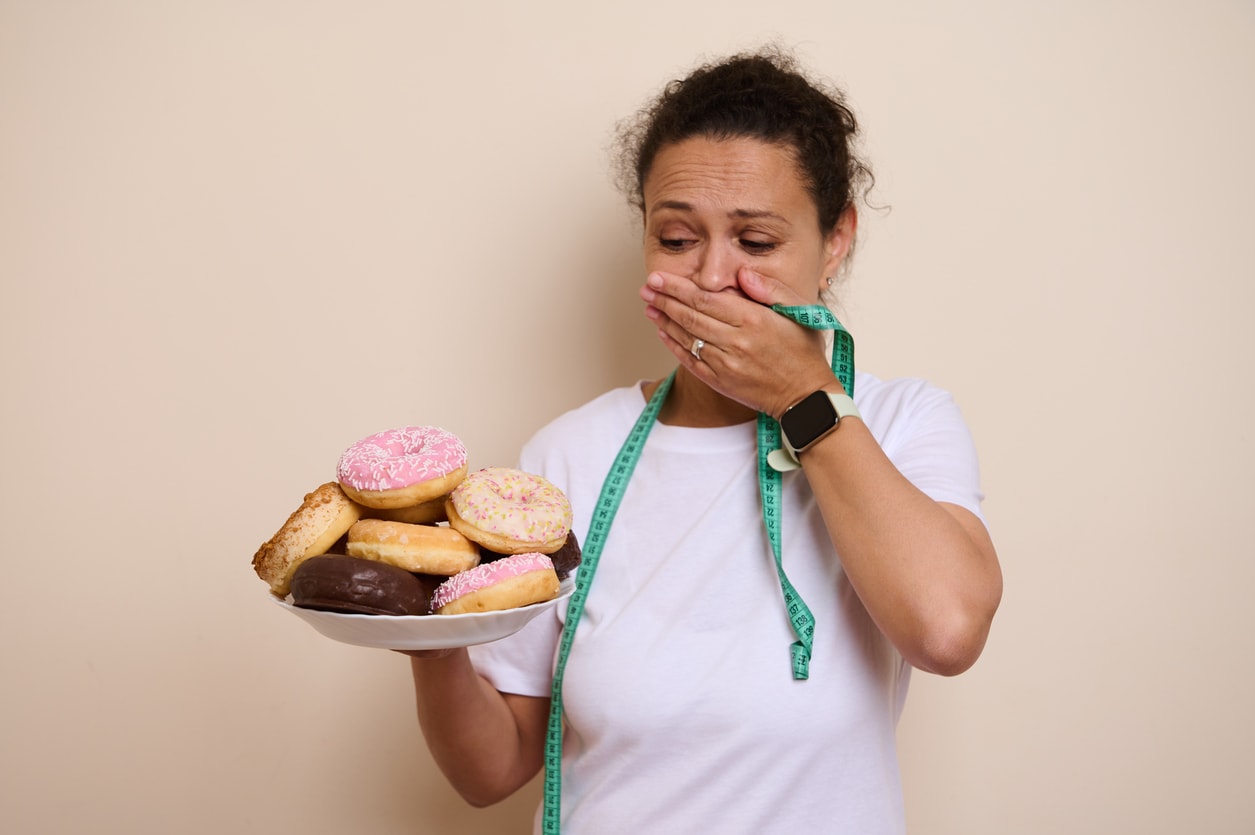
Food cravings during perimenopause are influenced by shifting hormones, disrupted sleep, and stress—and understanding your patterns through tracking can help you feel more in control.
Written by Simona Byler
Reviewed by Dr. Jaclyn Piasta
Monarch Health
Food cravings during the menopause transition can be confusing: are they just a normal part of life, or are fluctuating hormone levels making them worse? While there’s no simple answer, tuning into your cravings and understanding what affects them can help you feel more in control. Let’s discuss the key details of perimenopause food cravings and how tracking can help.
Are food cravings a symptom of menopause?
We need more research before we can conclusively say whether the menopause transition causes food cravings. However, a data collection of over 238,000 women aged 18-55 found that 85% of women experienced cravings during every menstrual cycle .
While cravings and disordered eating aren’t the same, perimenopause can be a time when some people are more vulnerable to binge eating. Binge eating is defined as eating a large amount of food in a short period while feeling a loss of control .
Ovarian hormones and eating patterns
Estrogen and progesterone are ovarian hormones that fluctuate in predictable ways during the menstrual cycle and more unpredictably during the menopause transition . These hormones can influence food intake and emotional eating in premenopausal women, and may have a similar effect during perimenopause .
Here’s what the research tells us about binge eating and menopause :
Binge eating can affect anyone: While we often think of disordered eating as a younger person’s issue, binge eating can also happen during midlife and deserves attention.
Hormones play a role: Changes in ovarian hormones, including decreases in estrogen, may increase the risk of binge eating. However, these changes don’t affect everyone in the same way.
Hormone sensitivity: Women who are more sensitive to hormonal changes and experience stronger menopausal symptoms, such as mood swings, hot flashes, or sleep problems, may be more likely to notice binge eating.
How disrupted sleep causes food cravings
Poor sleep is a common and frustrating occurrence during the menopause transition. Night sweats and nighttime awakenings can make it harder to get a good night’s sleep, and disrupted sleep patterns can affect your eating habits .
Sleeping less than the recommended 7-9 hours per night can affect ghrelin and leptin, the hormones that regulate your hunger . Combined with changes in estrogen levels, sleep disturbances can affect your metabolism and increase the risk of weight gain .
Not getting enough sleep, or getting poor quality sleep, can lead to :
Eating more calories
Increased snacking
Craving foods high in fat or carbohydrates
If you’re experiencing intense food cravings during the menopause transition, give yourself grace and approach them with understanding. Perimenopause staples such as stress, poor sleep, and hormonal changes can all drive you to seek comfort in food. Discuss your nutrition and cravings with your healthcare provider, and explore how they may be related to perimenopause.
Curb cravings with tracking
If you’re part of the 85% of women who experience cravings, tracking can help you understand your cravings and work with them, not against them . Tracking your food intake, urges, and related factors, such as sleep or stress levels, can help you see the bigger picture: when food cravings happen, what particular foods you reach for, and what seems to make them better or worse.
Tracking won’t make your food and sugar cravings disappear. However, it can help shift your focus from your in-the-moment urges to your overall diet and health. For example, if you had more sugary treats than usual today, tomorrow you can focus on eating foods that keep you full, maintain blood sugar levels, and reduce hunger cravings—think: protein, complex carbs, and fiber-rich foods. Over time, tracking can highlight positive trends in your nutrition and where you may benefit from additional support. And, as always, remember to stay hydrated!
DISCLAIMER
This article is intended for educational purposes only, using publicly available information. It is not medical advice, and it should not be used for the diagnosis, treatment, or prevention of disease. Please consult your licensed medical provider regarding health questions or concerns.
Want support through the transition?
Sign up for early access to Amissa and stay informed as we grow.