 MAB Reviewed
More Than Just Aging: How Menopause Affects Your Skin
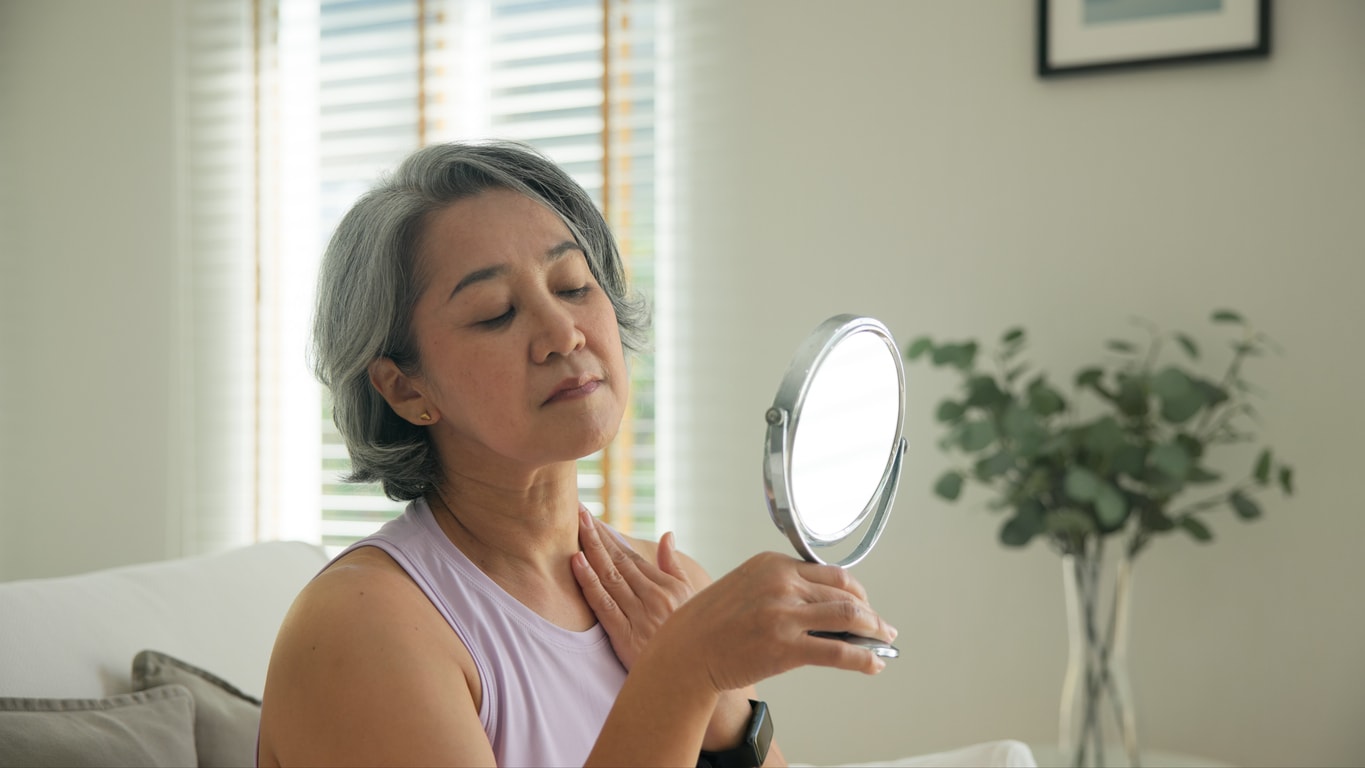
Menopause can cause your skin to feel drier, thinner, and less elastic as declining estrogen levels reduce collagen and hydration. These hormonal shifts can accelerate visible aging and increase sensitivity, dryness, or irritation. Tracking your skin changes helps you see what’s working—so you and your provider can find the best treatments for healthy, confident skin.
Written by Simona Byler
Reviewed by Dr. Jaclyn Piasta
Monarch Health
If your skin feels drier, thinner, or less elastic, you’re not imagining it, and you’re not alone. While skin changes are a natural part of aging, menopause can bring about more dramatic shifts, and they can happen quickly.
Wondering why skin problems and menopause are related? Read on as we discuss common menopausal skin complaints, how hormonal changes contribute, and which treatment options can help.
Is menopause affecting my skin?
Menopause can affect almost every part of your body, including your largest organ: your skin. Many women experience skin changes during the menopause transition. In fact, a 2018 survey of 1,287 women found that :
72% experienced changes in their skin during peri- and postmenopause, and
50% said they hadn’t received adequate information about these changes.
While we can’t roll back the clock and change how menopause impacts your skin, we can give you the information you need to feel empowered and prepared.
Aging skin and menopause
As we get older, our skin gets older, too. While the changes are typically gradual, many people notice a sudden swell of skin aging symptoms after entering menopause .
Collagen, the body’s main structural support protein, plays a large role in these changes. Your skin loses up to 30% of its collagen within the first five years after menopause, and collagen production decreases by 2% per year for 15 years after .
This decrease in collagen can contribute to several noticeable skin changes, including :
Dry skin
Itching
Fine lines and wrinkles
Thinning and sagging skin
Loss of firmness and elasticity
While these changes usually do not affect your physical health, they can certainly impact how you feel mentally and emotionally. Reach out to your healthcare provider if your skin changes are negatively affecting your well-being.
Other menopause skin conditions
Besides aging skin, other skin and hair conditions are also common after menopause. It’s important to remember that these conditions don’t just affect the skin on your face, though that’s where they may be most visible.
Common menopausal skin conditions include :
Acne
Flushing
Eczema
Contact dermatitis
Itching ears
Poor wound healing
Unwanted facial hair
Female pattern hair loss
Vaginal dryness, itching, and irritation
Pigmentation changes, such as melasma
Cutaneous dysesthesia, or when the skin feels more easily irritated, tingly, or reactive than usual
While we don’t fully understand the exact role menopause plays in many of these changes, declining estrogen levels have a profound effect on your skin’s structure and function . Wondering why that’s the case? Let’s dive into the details.
What causes skin changes during menopause?
Hormonal changes are a primary cause of many menopausal symptoms, from hot flashes to dry skin . Your skin is full of estrogen receptors, which are most densely concentrated in your face, legs, and genital region . Estrogen helps your skin stay hydrated and firm, and helps it maintain an even texture and pigmentation .
As your hormones fluctuate during the menopause transition, you may begin to notice some changes in your skin hydration. Relative changes in androgens, or male hormones such as testosterone, can cause your skin’s oil production to vary, leading to increased dryness .
Estrogen levels drop sharply after entering menopause and can cause your skin to change and age more rapidly. Postmenopausal women may experience several characteristic skin changes, including :
Decreased oil, or sebum, production
Lower skin barrier function, leading to dryness
Reduced collagen and elastin production, leading to thinning
Lower antioxidant function, leading to fragility and poor wound healing
Other contributing factors
Aging and estrogen deficiency are largely responsible for skin changes in postmenopausal people. However, lifestyle and demographic factors also play a major role. These factors include :
Race
Genetics
Smoking
Sun Exposure
While you can wear broad-spectrum sunscreen to reduce further sun damage, both genetics and race bring inherent differences in skin aging and structure that you can’t control .
Skin color can greatly influence how your skin ages, with Black menopausal women showing fewer visible wrinkles than white women . However, we need more research—and more diverse and inclusive studies—to fully understand how estrogen deficiency affects skin globally.
How to treat menopausal skin changes
Skin aging is an inevitable part of life. However, treatment options may help alleviate some symptoms of estrogen-deficient skin, and a simple skincare routine can help keep your skin healthy over time. Talk with your healthcare provider to determine which treatment avenue best suits your unique needs and situation.
Hormone therapy
Hormone therapy (HT), previously called hormone replacement therapy, is an effective treatment for a wide range of menopausal symptoms, including hot flashes, night sweats, and vaginal dryness .
HT may also help manage skin and hair symptoms, as women receiving HT through either a patch or a pill showed improvements in skin hydration, texture, and collagen content . However, doctors don’t currently recommend HT for skin symptoms alone .
Different types of HT are available, including :
Systemic hormone therapy: Taken through either a patch or a pill, systemic HT may increase skin thickness, elasticity, and hydration.
Local vaginal hormone therapy: Applied as a cream, tablet, or ring, vaginal estrogen restores moisture, elasticity, and thickness to vaginal tissues. This relieves dryness, itching, and discomfort with minimal absorption into the bloodstream.
Topical estrogen therapy: Available as a cream or gel, topical therapy may help treat dry skin, improve elasticity and texture, and reduce visible wrinkles in estrogen-deficient skin.
Although these findings are encouraging, current research is still limited and inconclusive. We need more studies to understand HT’s effects on estrogen-deficient skin fully.
Non-hormonal options
With so many skincare products on the market, it can be difficult to decide what to include in your daily routine. Talk with your provider or dermatologist to determine which products best suit your needs, and consider the following options:
Sun protection: Wearing sunscreen and staying out of the sun is essential for lifelong skin health! Sun protection can help prevent skin aging and reduce your risk of developing skin cancer .
Pro-xylane: This skincare ingredient may improve skin elasticity, reduce visible signs of aging, and help with sebum composition .
Hyaluronic acid: A natural part of your skin’s extracellular matrix, hyaluronic acid plays a role in skin elasticity and moisture retention .
Cassia extract: This plant extract is used in traditional medicine and may help with anti-aging by limiting cortisol’s effects on your skin .
Cosmetic treatments: While not for everyone, cosmetic surgeries and minimally invasive procedures can be useful for addressing specific aesthetic or age-related concerns. Dermal fillers can restore volume and facial contours, and can be combined with HT or other skincare treatments .
Stay in control of skin aging with tracking
While new wrinkles don’t form overnight, menopause can make your skin change more quickly and noticeably than before. Tracking your skin symptoms won’t stop them from happening; however, tracking can help you understand the changes—what’s shifting, how fast, and how you feel—and give you a greater sense of control.
Tracking can also help you see how your skin responds to different treatments and products over time. Whether you’re beginning hormone therapy or trying a new moisturizer, monitoring changes over several months can reveal what’s working and what you could remove from your routine.
As always, be sure to share your symptoms and concerns with your healthcare provider. Sharing your tracking data gives your provider a clearer view of your symptoms, especially how aging skin may be affecting your overall well-being.
Questions to ask your provider
Whether you’re experiencing menopausal acne, dry and thinning skin, or another frustrating skin change, you don’t have to suffer in silence. Talk with your healthcare provider if your skin changes are bothering you and affecting your self-esteem. Here are a few ideas to get the conversation started:
I’ve been tracking my skin changes over the last several months, and I’d like to talk through what I’ve noticed. Can I share my data and get your opinion?
I have a typical skin care routine, and I’ve been using sunscreen, but are there any other products you recommend for keeping mature skin healthy?
The way my skin has changed since menopause is really affecting my confidence and self-esteem. Can we talk about the treatment options available to help?
DISCLAIMER
This article is intended for educational purposes only, using publicly available information. It is not medical advice, and it should not be used for the diagnosis, treatment, or prevention of disease. Please consult your licensed medical provider regarding health questions or concerns.
Want support through the transition?
Sign up for early access to Amissa and stay informed as we grow.